Welcome to My Blog!
Before we dive into the content, if you’re interested in our products or have any questions, please feel free to visit our Contact Us page on the website. Our team is ready to assist you with inquiries, orders, or any support you may need.
Now, let’s get started on our journey together. I hope you find the content here insightful, engaging, and valuable.
Table of Contents
Unlock effective strength training, clutter‑free organization, and ergonomic design for every fitness level.
Strength training is no longer reserved for commercial gyms. As home workouts continue to grow in popularity, more fitness enthusiasts like you are investing in compact and functional equipment. Among these essentials, a dumbbell rack 2 tier stands out as one of the most practical additions to any home gym.
In this comprehensive guide, you’ll learn why a 2‑tier dumbbell rack is a game‑changer, how to choose the right one, real‑world scenarios of optimized home gyms, space planning charts, workout organization tips, cost comparisons, and safety best practices.
Why a Dumbbell Rack 2 Tier Is a Home Gym Essential
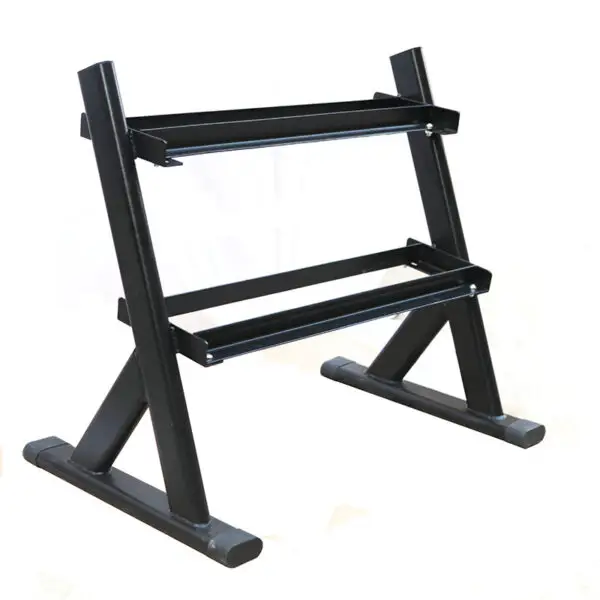
If you’re serious about building strength and consistency, random weights lying around on the floor are not helping you — they’re hurting your space and your motivation. A 2‑tier dumbbell rack brings order to chaos, giving you:
- Enhanced accessibility — quick access to all your weights
- Improved safety — eliminates trip hazards
- Better space utilization — vertical organization frees floor area
- Progress visualization — you can instantly see the weight progression
According to a home gym survey by Fitness Trends Research, gym users who installed organized storage reported 30% increased consistency in weekly workouts compared to those without organized equipment.¹
👉 Pro tip: When you walk into your workout space and see organized equipment, your brain prepares for action — this alone can increase workout frequency.
Anatomy of a 2‑Tier Dumbbell Rack: What to Look For
A well‑designed 2‑tier rack should combine stability, ease of use, and durability. Here are the essential components you should evaluate:
| Feature | What It Means | Why It Matters |
|---|---|---|
| Tier Height | Vertical space between top and bottom row | Determines ease of placement and retrieval |
| Shelf Angle | Flat vs angled design | Angled shelves make dumbbells easier to slide off |
| Material Strength | Thick steel vs lighter metal | Affects load capacity and longevity |
| Footprint Size | Width & depth | Impacts room space usage |
| Assembly Complexity | Number of parts & tools required | Time & effort to set up |
| Weight Stops | Rubber or metal edges | Keeps dumbbells from rolling off |
💡 Quick evaluation tip: If you’re unsure which rack to choose, prioritize weight capacity and stability features — weight storage and user safety always come first.
Real Case Studies: Space Optimization in Action
Let’s look at two practical scenarios where fitness enthusiasts optimized their space using a 2‑tier dumbbell rack.
Case A – Small Apartment Gym (100 sqft)
Before: Dumbbells scattered across a corner, workout flow interrupted.
After:
- Installed a slim dumbbell rack 2 tier along one wall
- Added wall‑mounted resistance band hooks
- Cleared walkways for floor exercises
Outcome:
- Floor area increased by 15%
- Time spent searching for weights reduced
- Workout enjoyment improved
Case B – Garage Gym Conversion (200 sqft)
Before: Heavy weights on the floor, cluttered corner spaces.
After:
- Placed a 2‑tier rack near the squat rack zone
- Created a weight station distinct from cardio area
- Integrated protective flooring
Outcome:
- Enhanced gym flow
- Weight progression tracking became easier
- Injury risk from misplaced equipment dropped substantially
How a Dumbbell Rack Enhances Workout Efficiency
You may not realize it, but equipment layout directly impacts workout flow and training intensity.
Improve Workout Flow with Organized Weights
Walking back and forth between exercises wastes time — especially when you’re doing circuits or supersets. A 2‑tier rack keeps all weights in clear view and reach, minimizing downtime.
A study in the Journal of Strength Conditioning found that organized equipment can reduce transition time between sets by up to 20%, allowing you to maintain a higher heart rate and better focus.²
Planning Your Home Gym Layout with a 2‑Tier Rack
Let’s break down how to plan your space around a dumbbell rack. Below is a recommended placement guide based on room size:
| Room Size | Suggested Placement | Additional Equipment |
|---|---|---|
| < 120 sqft | Against longest wall | Foldable bench |
| 120 – 180 sqft | Corner placement near workout zone | Multi‑adjustable bench |
| > 180 sqft | Dedicated free weight section | Full strength zone with bands, bars |
📌 Layout Tip: Leave at least 3 feet of clear space in front of the rack for safe lifting and dumbbell movement.
For guidance on optimal gym layout, you can refer to architectural insights at the American Council on Exercise—ACE: https://www.acefitness.org/education‑and‑resources/lifestyle/blog
Weight Capacity and Load Distribution Explained
Your dumbbell rack must support your full range of weights. Racks commonly range from 100–500 lb total capacity or more. When choosing, calculate your total dumbbell weight:
Load Calculation Example
| Dumbbell Pair | Weight | Total Load |
|---|---|---|
| 10 lbs | 2 | 20 lbs |
| 25 lbs | 2 | 50 lbs |
| 50 lbs | 2 | 100 lbs |
| 75 lbs | 2 | 150 lbs |
| Total | — | 320 lbs |
In this example, your rack should support at least 350 lbs to be safe.
For engineering standards on load capacities, review weight shelf design principles at the Structural Engineering Association resource page: https://www.seaoc.org
Materials, Build Quality & Longevity
Steel Frame
Most 2‑tier racks use steel for strength. Look for:
- Powder‑coated finish to prevent rust
- Reinforced joints at high‑stress points
- Rubber feet to protect your floor
Shelf Surface
Rubberized shelves help:
- Reduce noise when placing weights
- Prevent scratches
- Improve grip
Importance of Certifications
Equipment tested to industry standards such as ASTM ensures your investment is safe. You can learn more about safety and testing standards at the Consumer Product Safety Commission (CPSC): https://www.cpsc.gov
Maintenance Tips: Keep Your Rack Lasting Longer
To extend the life of your dumbbell rack:
- Wipe down weekly to avoid sweat corrosion
- Tighten bolts every 3 months
- Keep weights centered on shelves (don’t hang off the sides)
Regular maintenance helps avoid structural wear and keeps your gym pristine.
Safety Considerations Before You Buy
Before purchasing, consider the following:
Floor Protection
High‑impact drops can damage floors. Consider protective mats or rubber tiles underneath your rack.
For guidance on protective surfacing for home gyms, visit: https://www.fitnessfacilitydesign.com
Clearance Space
Always leave enough room to handle dumbbells safely without hitting walls or other equipment.
Ergonomics
The height and angle of shelves should allow you to pick‑up and replace dumbbells with minimal bending.
Practical Tips for Organizing Dumbbells
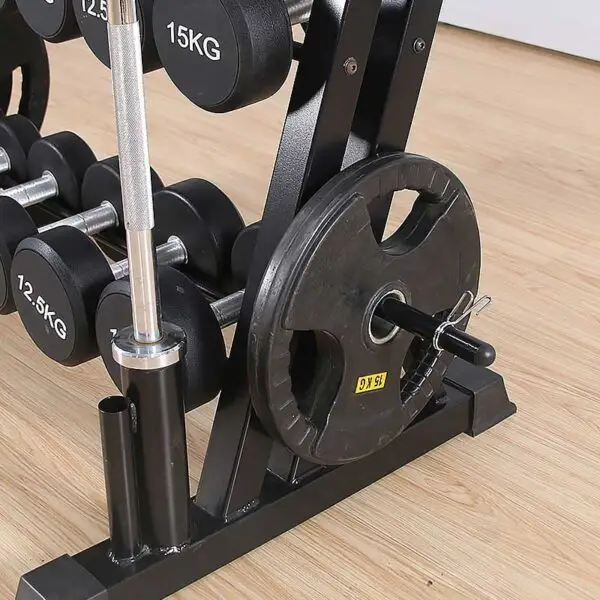
Here are organizational tips that improve your training experience:
Label by Weight
Use clear, visible markers so you can spot weights instantly.
Order by Frequency
Place your most‑used weights on the top tier for easy access.
Color Coding
Add simple bands or stickers to distinguish weight ranges.
Routine Rotation
Every month, reassess your layout based on workouts you do most.
Cost & Value Comparison (With Data Table)
Below is a sample cost/value comparison for dumbbell storage solutions:
| Storage Type | Estimated Cost | Capacity | Space Usage | Best For |
|---|---|---|---|---|
| Dumbbell Rack 2 Tier | $120–$350 | Up to 500+ lbs | Medium | All gyms |
| Single Tier Rack | $80–$250 | Up to 300 lbs | Wide | Small collections |
| Wall Mount Holders | $60–$180 | Limited | Minimal | Light weights |
| Floor Storage Only | $0 | Unlimited | High | Budget setups |
👉 Insight: While a two‑tier rack costs more than floor storage, the safety, efficiency, and space savings make it a high‑ROI purchase for serious trainers.
Final Thoughts
A smartly chosen dumbbell rack 2 tier transforms your home gym from cluttered and inefficient to clean, safe, and workout‑ready. Whether you’re beginning your fitness journey or leveling up your strength training, this storage solution directly impacts how you use your space and how consistently you train.
By following the guidance above — from layout planning and weight calculations to safety practices and maintenance — you’ll be equipped to choose the best setup that keeps your workouts flowing and your gear organized.
Ready to upgrade your home gym? Start with a dumbbell rack that matches your goals, and your workouts will thank you!
FAQ
How much space do I need for a 2‑tier dumbbell rack?
You should allow at least 3 feet of forward clearance and enough width for all your weights.
Can I put other equipment on the rack?
It’s best to only store dumbbells on a rack. Extra accessories can interfere with stability.
What’s the difference between flat and angled shelves?
Angled shelves make lifting weights easier and more ergonomic, especially for heavier sets.
How do I know if my rack is strong enough?
Add up your total dumbbell weight, then choose a rack with at least 20% more load capacity than your total.
Are 2‑tier racks suitable for commercial gyms?
Yes — as long as they meet load and safety standards required for high‑use environments.
Should I anchor the rack to the floor?
For heavy weight setups, anchoring adds stability, especially in high‑traffic spaces.