Welcome to My Blog!
Before we dive into the content, if you’re interested in our products or have any questions, please feel free to visit our Contact Us page on the website. Our team is ready to assist you with inquiries, orders, or any support you may need.
Now, let’s get started on our journey together. I hope you find the content here insightful, engaging, and valuable.
Table of Contents
Introduction
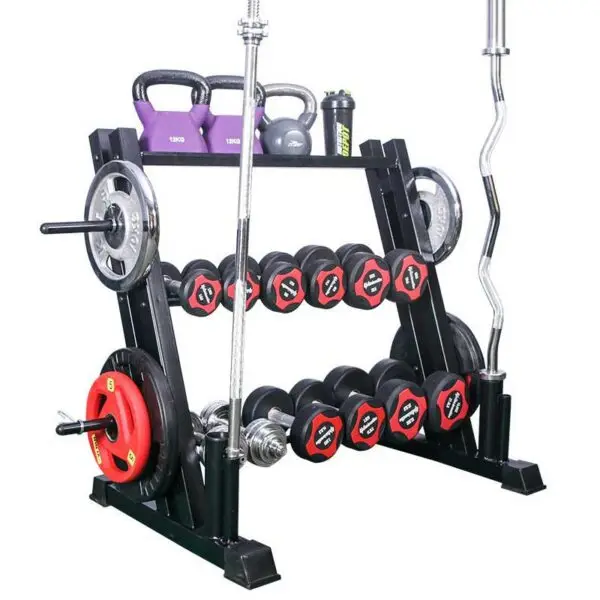
A clean, organized gym is not just about aesthetics—it’s a foundation for effective training. Whether you’re a fitness enthusiast setting up a home gym or a gym owner managing commercial equipment, smart weight storage plays a key role in safety, convenience, and efficiency. With a growing number of dumbbells, weight plates, and fitness tools, you’ll need reliable storage solutions to avoid clutter and injuries. Two of the most common options are dumbbell set racks and weight trees, both offering different benefits depending on your gym’s focus.
But which is better? This article provides a detailed comparison between the two, helping you determine the best fit for your workout space and training style—especially if you’re looking to make a smart purchase that improves gym organization while showcasing your equipment.
Pros and Cons of Dumbbell Set Racks
Dumbbell set racks are engineered for a very specific purpose: to hold multiple dumbbells in a structured and accessible way. Their tiered or flat layout allows you to easily pick up and return weights during workouts, without compromising your form or wasting time.
Advantages include:
- Structured layout: Organize by weight, type, or usage frequency.
- Tiered design: Typically 2-tier or 3-tier options allow clear visibility of all dumbbells.
- Durability: Made of powder-coated steel to support heavy loads.
- Versatility: Compatible with hex, round, rubber, urethane, or adjustable dumbbells.
Potential drawbacks:
- Heavier build: Can be difficult to move once loaded.
- Takes up space: Requires more floor space than vertical storage options.
- Higher cost: Generally priced above weight trees due to material and load capacity.
Despite some cons, dumbbell set racks are favored for their stability, professional appearance, and long-term usability. If you’re serious about strength training or plan to expand your dumbbell collection, this is a strong investment.
Pros and Cons of Weight Trees
Weight trees, often used in commercial and garage gyms, are vertical storage solutions designed to hold barbell plates via multiple pegs or horns. Their tall, narrow structure helps save floor space, making them appealing in tight environments.
Benefits include:
- Compact footprint: Ideal for storing multiple plates without spreading them out.
- Lower cost: Typically more affordable than dumbbell set racks.
- Easy access: Grab-and-go loading for barbell workouts.
- Lightweight frame: Easier to relocate compared to heavy-duty racks.
Limitations:
- Not suitable for dumbbells: Most weight trees are designed for Olympic or standard plates only.
- Balance issues: Can tip over if plates are unevenly loaded.
- Less organization: No clear segmentation by weight unless labeled.
- Limited versatility: Only useful for plates, not dumbbells or other gear.
Weight trees are a smart choice if you use barbells regularly and need a quick, space-saving way to store weight plates. But for dumbbell-heavy training, their limitations become immediately apparent.
Which Saves More Space: Dumbbell Set Rack or Weight Tree?
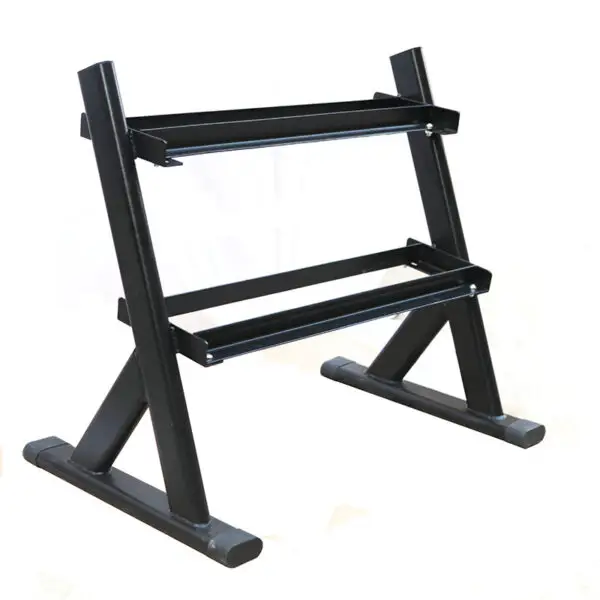
For home gym owners or apartment dwellers, space-saving equipment is crucial. Weight trees have a vertical design, which allows multiple weight plates to be stacked in one compact unit. This design works well for barbell plates, especially in tight spaces like closets, corners, or beside power racks.
However, dumbbell set racks, while wider, offer horizontal organization that prevents clutter. A 3-tier rack, for example, can hold 8–12 pairs of dumbbells, which would otherwise be scattered across the floor. This keeps your workout area safe, prevents tripping hazards, and gives your gym a more professional look.
In essence:
- Weight trees save floor area, but only for plates.
- Dumbbell set racks save organizational space, especially for full dumbbell sets.
If your training routine is dumbbell-focused, then the smart long-term space-saving solution is a dedicated dumbbell set rack.
Which Offers Better Stability?
When it comes to storing heavy weights, stability isn’t optional—it’s essential. Dumbbell set racks are built from heavy-gauge steel, with reinforced joints and rubberized feet for grip. They remain stable even under the pressure of 300+ lbs. of equipment. Some even allow you to bolt them to the ground for maximum security.
Weight trees, in contrast, often rely on even distribution of plates to remain balanced. When plates are loaded unevenly, especially on one side or peg, the tree can wobble or even tip over—posing a safety risk.
For homes with children, pets, or small workout spaces, you want equipment that stays put. This makes dumbbell set racks a more secure and accident-proof choice.
Dumbbell Set Rack vs Weight Tree for Small Home Gyms
Let’s face it—not everyone has an entire basement or garage to turn into a gym. For smaller spaces, every square meter counts. But how do you choose the right storage?
If your gym focuses mainly on dumbbell training, a compact 2-tier or vertical dumbbell set rack is ideal. It gives you the flexibility to organize your weights by size and access them without moving other gear around.
Weight trees work best in small spaces only if your training is barbell-oriented. Even then, the space saved vertically may be offset by the need for safe loading/unloading space.
In tight areas, dumbbell set racks with angled tiers and rear-facing handles help you retrieve weights without twisting your body awkwardly. Yinuo offers compact dumbbell set racks designed specifically for small spaces without sacrificing durability.
Which Looks Better in a Home Gym?
Your gym isn’t just a functional space—it’s a reflection of your commitment to health and your personal brand. Whether you’re creating a YouTube workout studio, Instagram content, or simply want motivation to work out, visual appeal matters.
Dumbbell set racks typically come in sleek black, matte silver, or chrome finishes with clean lines and a tiered design that showcases your collection. They create a “gym-worthy” look that instantly elevates your home setup.
Weight trees, while functional, often look more industrial and less polished. Overloaded pegs and mismatched plates can make your space look cluttered.
If your gym is part of your daily visual inspiration, dumbbell set racks win every time in aesthetics and presentation.
What to Consider Before Buying a Dumbbell Set Rack
Before clicking “buy now,” consider the following factors to ensure you’re getting the right rack for your space and workout needs:
- Weight capacity: Can it hold all your current and future dumbbells?
- Tiers or layout: 2-tier racks are more compact; 3-tier racks offer better weight distribution.
- Compatibility: Hex vs round dumbbells, adjustable vs fixed.
- Material and finish: Steel with powder coating lasts longer.
- Assembly & mobility: Do you need it to move or stay fixed?
- Footprint: Measure your space before purchase.
Yinuo’s racks tick all the boxes: heavy-duty steel, rust-resistant coatings, non-slip feet, and easy-to-follow assembly instructions. Plus, they’re available in various sizes to suit both beginners and advanced users.
Vertical vs Horizontal Dumbbell Set Racks
Both vertical and horizontal racks have their strengths. Let’s compare:
- Vertical racks: Ideal for tight spaces, single-column design, stores fewer dumbbells, looks neat and minimal.
- Horizontal (tiered) racks: Offer more capacity, easy access, good visibility, bulkier footprint.
If you’re only storing 3–5 pairs of dumbbells, vertical might be enough. But if you’re investing in a full dumbbell set or planning to grow your collection, horizontal racks offer better scalability and usability.
Yinuo provides both styles—so you can match your choice to your space and training intensity.
Budget Dumbbell Set Racks vs Premium Weight Trees
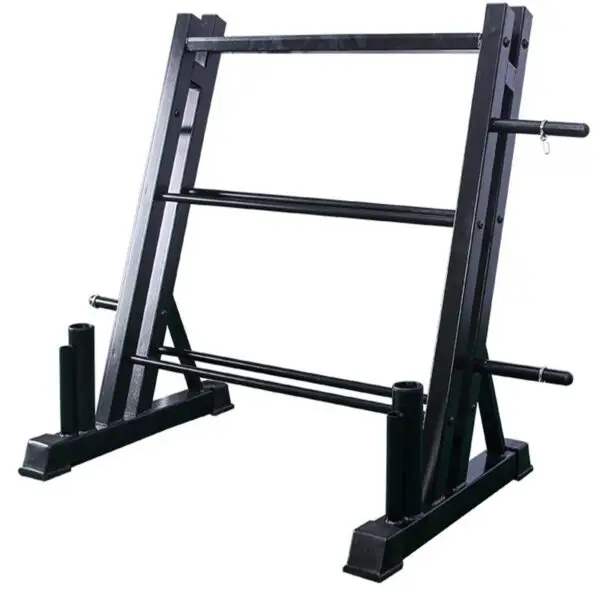
When choosing between low-cost options and premium products, remember the old saying: “Buy cheap, buy twice.”
Budget racks may use thinner steel, lack protective coatings, and feel wobbly under heavy loads. This not only shortens the lifespan of your investment but also puts your safety at risk.
In contrast, premium racks like Yinuo’s feature:
- High-grade steel frames
- Anti-corrosion finishes
- Heavy-duty bolt connections
- Non-slip rubberized feet
They’re engineered for durability, safety, and ease of use. While the upfront cost might be higher, the long-term savings in durability, injury prevention, and organization make them a better value.
Conclusion
In summary, dumbbell set racks and weight trees serve different purposes. If your fitness equipment consists mostly of dumbbells, there’s no contest: dumbbell set racks are the clear winner.
They provide:
- Better safety and stability
- Enhanced organization
- A more professional gym appearance
- Future-ready scalability
- Greater compatibility with multiple dumbbell types
If your setup includes barbell plates and minimal dumbbells, weight trees may suffice—but for most home gyms, especially modern setups, a dumbbell rack is the smarter, safer, and more versatile investment.
FAQ
Can I store dumbbells on a weight tree?
Not safely. Weight trees are designed for plates. Dumbbells may fall or cause imbalance.
How many dumbbells can a 3-tier rack hold?
Depending on size, typically 6–10 pairs (12–20 dumbbells total).
Are Yinuo dumbbell racks adjustable?
Yes. We offer both fixed and adjustable tier spacing options.