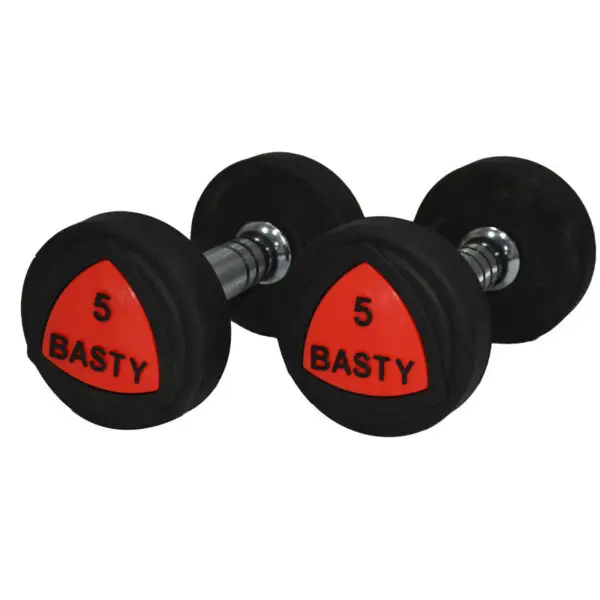
Is your dumbbell rack wobbly, has an uneven surface or feels unstable?
If your gym members regularly work out with dumbbells, a weak dumbbell rack can not only be a nuisance, but it can also affect training results, safety and motivation.
Standard dumbbell racks usually can’t withstand the intense use and weights found in a gym environment.
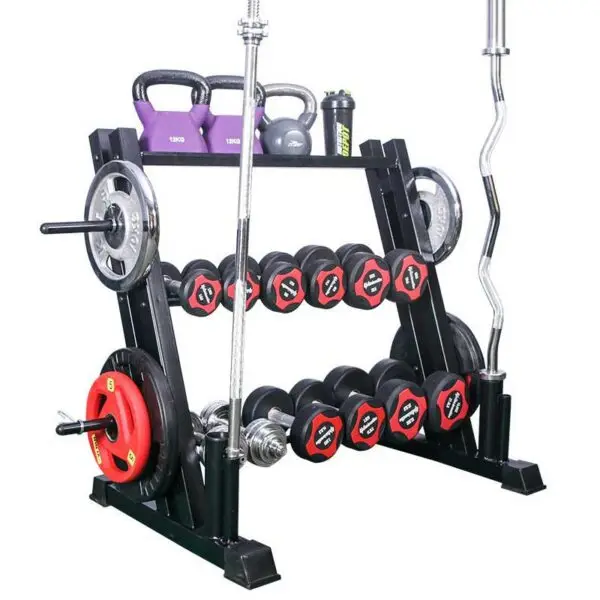
Over time, they can tip over to, warp or even collapse.
This is why choosing the right dumbbell rack is so important.
In this guide, you will be taken through the factors that really matter, weight capacity, sturdy materials, safe storage location and space-saving design so you can choose a dumbbell rack that will reliably support your dumbbells and perform your daily workouts day in and day out.
Key Buying Factors for Gym Dumbbell Racks
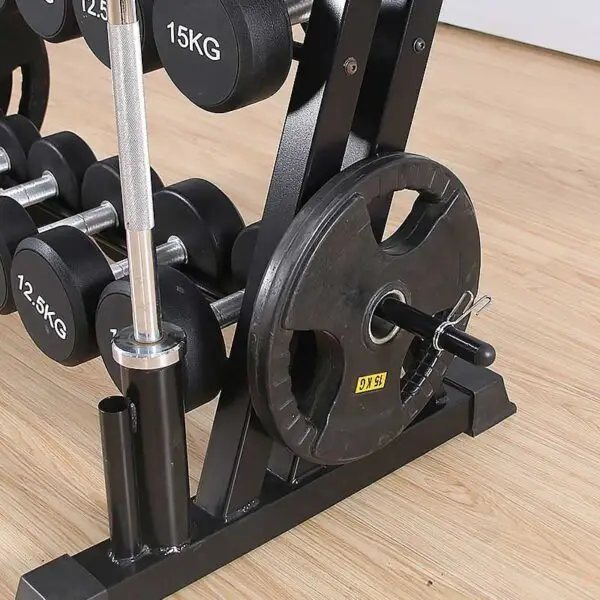
Not all dumbbell racks are built to withstand the intense use and weight of a gym, and if you’ve ever experienced a dumbbell rack tipping over or having a loose connection, you’ll know what we mean.
So what should you really be concerned about when choosing the right dumbbell rack for your gym?
Let’s break it down in more detail.
Weight Capacity (Primary Consideration)
Start by checking the weight capacity limitations of the dumbbell rack.
You need a dumbbell rack that can hold at least 500 pounds (about 230 kilograms), especially if multiple people are using it at the same time.
Don’t forget the weight of the dumbbells themselves; some larger dumbbell sets can add weight quickly, especially when using heavier weights.
Frame Material
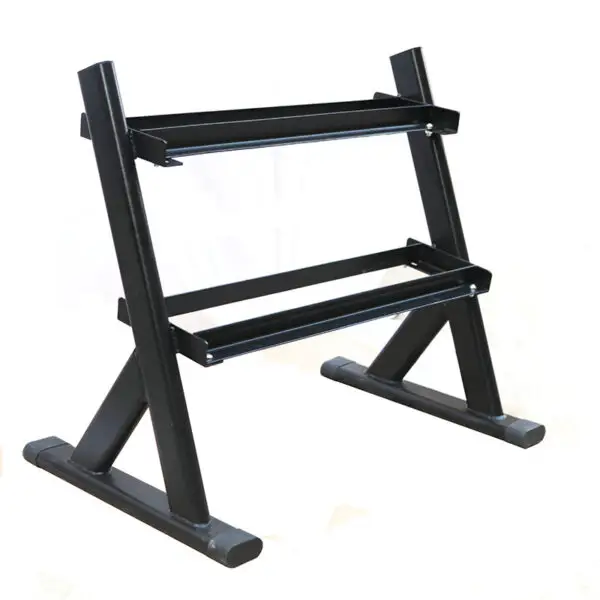
Steel is the strongest choice, it is durable, strong and suitable for high intensity use.
Other sturdy materials, such as reinforced polymers or thick-walled metal tubing, are also good choices.
It is more stable than thin metal and can hold weight well if properly designed.
Don’t use flimsy wire racks or cheap plastic racks – they won’t hold up to heavy loads.
Storage Design and Spacing
Insecure storage slots are a shortcut to accidents.
Choose a dumbbell rack that meets the following requirements:
- Properly spaced storage slots to accommodate different sizes of dumbbells
- Deep and secure storage slots that prevent dumbbells from tipping or falling over
These designs will keep your dumbbells organized and extend the life of your equipment.
Stability Characteristics
The more supports, the better the stability.
Sturdy dumbbell racks should have a wide, sturdy base and may be equipped with additional supports.
This allows the dumbbell rack to remain stable and distribute the weight evenly.
Noise and Motion Control
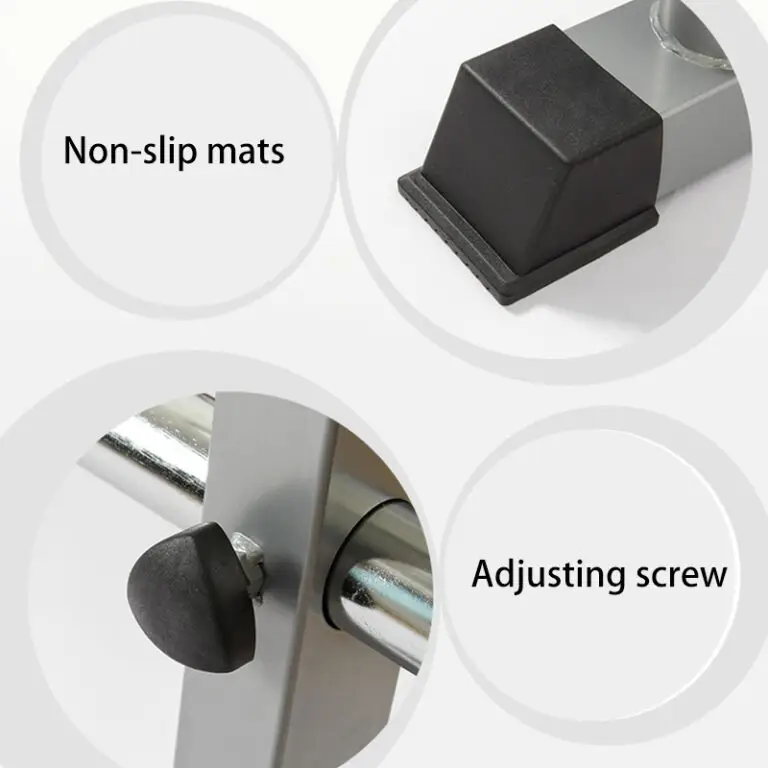
Tired of clanking noises?
Choose a dumbbell rack with rubber padding, a non-slip base, or a secure storage design.
These designs absorb motion and keep your workout area quiet – even during high-intensity training.
Proper Dumbbell Rack Height and Accessibility
Too low and reaching the dumbbells will be difficult.
Too high and it’s not easy to reach.
The ideal dumbbell rack gives you easy access to your dumbbells – essential for an efficient workout, especially when space is at a premium.
Want a dumbbell rack that truly meets your gym’s needs?
Keep these features in mind – they’ll help you avoid short-term fixes and find a dumbbell rack that really works for you.
Recommended Types of Dumbbell Racks for Gym Use
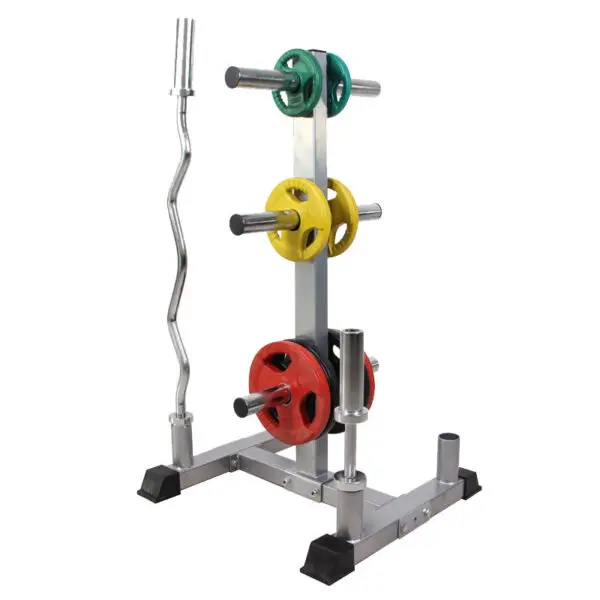
Now that you’ve learned the essentials of buying, let’s talk about which types of dumbbell racks meet all the needs of a gym environment.
Not all dumbbell racks are created equal – the wrong choice can lead to tipped dumbbells, noise and even equipment damage.
Here are some of the top dumbbell rack types that provide reliable strength and support for your dumbbell storage:
Heavy-Duty Steel Dumbbell Racks
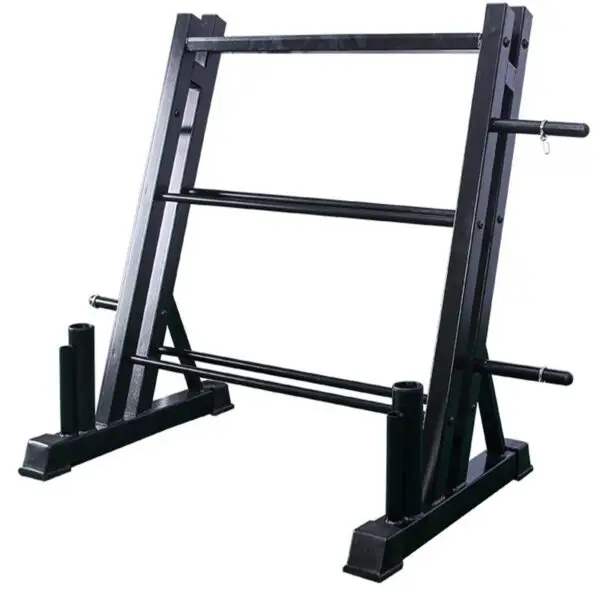
Looking for both strength and space?
Look no further than the Heavy Duty Steel Dumbbell Rack.
- Each tier holds 1,000 lbs. or more.
- Compact design maximizes storage density
- Often come with adjustable heights to accommodate different sized dumbbells
- Bonus feature: some dumbbell racks have built-in organizers for storing smaller weights and accessories.
If durability and space efficiency are most important to you, start here.
Modular Dumbbell Storage System
Want a storage system that is versatile and can expand with your collection?
The Modular System is ideal for you.
- Preferably made of reinforced polymers or thick steel plates.
- Look for interlocking modules that can be expanded as needed.
- These modules reduce clutter and adapt to different gym layouts.
- Ideal for those who want a system that can expand with their equipment.
Avoid cheap plastic modules, though – they can’t support heavier weights.
Wall Mounted Dumbbell Racks
Need to save floor space?
The wall mounted dumbbell rack is just what you need.
- Perfect for small home gyms or places with limited space.
- Distribute the weights evenly over the wall anchors for stability.
- Each dumbbell rack typically holds 300-500 pounds, so double check if you have heavier dumbbells.
If you prioritize saving space and the walls are able to support the weights, a wall-mounted dumbbell rack is the way to go.
Commercial Grade Freestanding Dumbbell Rack
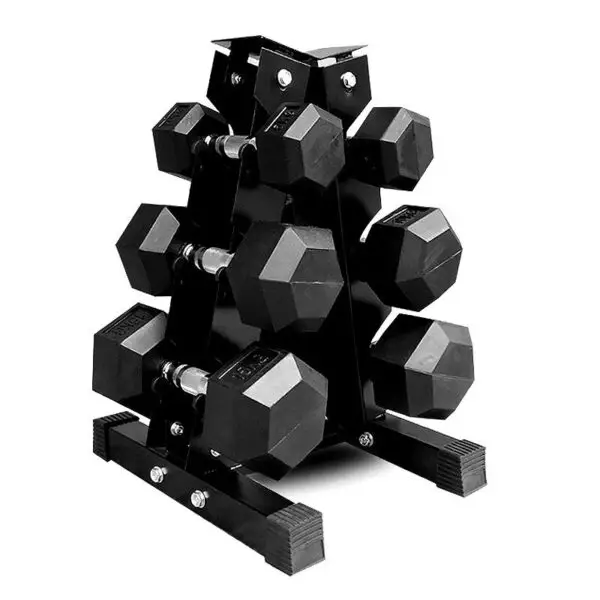
Yes, you can have both stability and convenience – just check its construction.
- Choose a model with a wide, sturdy base and an anti-tip feature.
- The rack should have deep grooves to hold the dumbbells in place.
- Avoid lightweight or head-heavy designs – they can tip over during use.
If you’re concerned about convenience and have enough floor space, this is a good choice as long as the base is weight-bearing and stable enough.
Each type of dumbbell rack has its pros and cons, but if you’re looking for long-term durability and safe storage, any well-designed dumbbell rack can be ideal for your gym.
Special Design Features to Look For
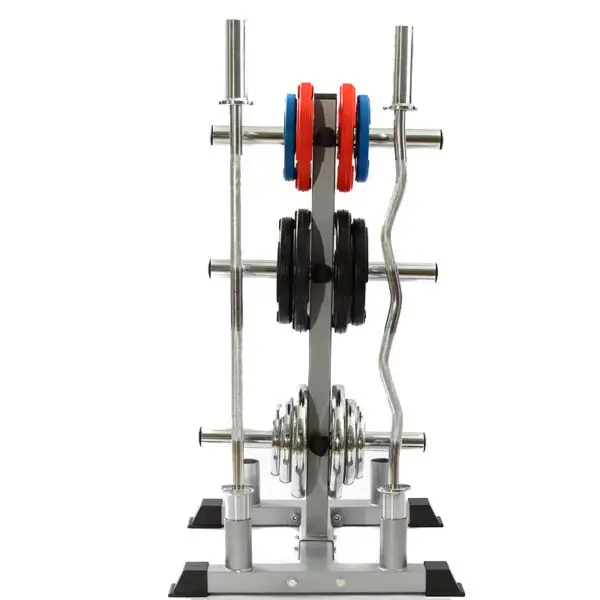
After choosing the right type of dumbbell rack, it’s important to think about the details – especially when it comes to long-term durability, safety and convenience.
If you want a dumbbell rack that does more than just store dumbbells, here are a few design features to look for:
Non-slip Surface
Tired of dumbbells sliding on your rack?
Look for dumbbell racks with rubber-coated shelves or non-slip linings.
These shelves provide better grip and help hold dumbbells in place – avoiding accidental tipping or bumping.
Integrated Safety Block
The integrated safety stops are not only easy to use, but also effective in preventing accidents.
These blocks prevent dumbbells from rolling off the edges, especially during busy training sessions.
Choose a dumbbell rack with built-in raised edges or blocks at the front and back of each rack.
Ergonomic Weight Labels
Still struggling to identify weights?
Some dumbbell racks have a built-in labeling system or color-coded card slots.
These features can help you quickly identify and access the dumbbells you need for a more efficient workout.
Convenient Storage Space
Want to make the most of your workout routine?
Choose a dumbbell rack with angled or tiered shelves.
This makes it easier to view and access all of your dumbbells without having to move others out of the way.
These details may seem insignificant, but they are especially important when you use your fitness equipment on a regular basis.
A well-designed, smart-functioning dumbbell rack will not only support your dumbbells, but also your training routine.
Dumbbell Racks and Dumbbell Fit
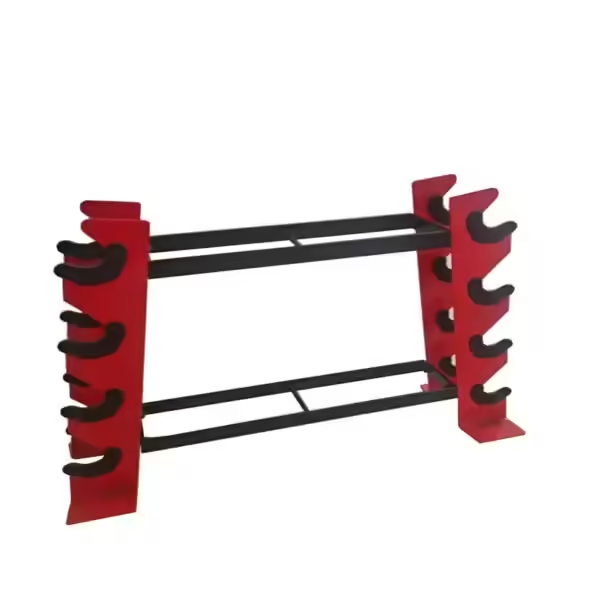
You’ve chosen a sturdy dumbbell rack, but does it match your dumbbells?
For high-traffic gyms, compatibility between dumbbell racks and dumbbells is critical.
Even the strongest dumbbell rack won’t perform at its best if the dumbbells slip or aren’t properly supported.
Match the Design of Your Dumbbell Slots to Your Dumbbells
Most dumbbells require dumbbell slots that hold the dumbbell plates securely in place.
Too much clearance can cause the dumbbells to move, reducing the stability of the rack and affecting the flow of your workout.
If you are using mismatched dumbbell slots.
You may need to add customized dumbbell pads or shims to ensure that the dumbbells fit securely.
Pay Attention to the Total Weight
Don’t forget: the dumbbell rack needs to support the weight of all the dumbbells as well as all the additional accessories.
Some large dumbbell sets weigh over 300 pounds by themselves.
Double-check the dumbbell rack’s weight limitations and allow for cushioning – it’s better to overestimate than to risk collapse.
No Additional Base Required (In Most Cases)
Many modern dumbbell racks are designed to support weights directly without the need for an additional base.
However, if you are using older dumbbell racks or non-standard weight sets, you need to check.
Choosing the right dumbbell rack for your dumbbells isn’t just about organization, it’s about protecting your equipment and providing reliable support when it counts.
Common Mistakes to Avoid
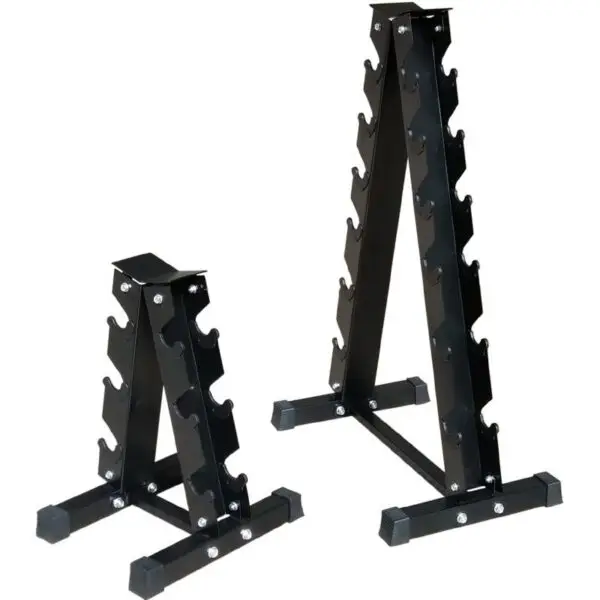
Even with the best of intentions, it’s easy to choose the wrong dumbbell rack if you don’t know what to look for.
To help you avoid problems like tipping, noise or early wear and tear, here are some common mistakes gym owners make and how to avoid them:
- Choose only dumbbell racks with narrow bases
This is not enough to ensure good stability. Look for a dumbbell rack with a wide, sturdy base, especially when storing heavier dumbbells. - Underestimate total weight
Remember to consider the weight of all the dumbbells and any additional accessories. Choose a dumbbell rack that holds at least 500 pounds or more. - Ignore Slot Design
Slots that are too shallow or too wide can cause dumbbells to shift or tip over. Make sure the slots are deep enough and the right size to hold the dumbbells securely. - Choose Fragile Materials
Avoid cheap plastics or thin metal wires. Choose sturdy steel or reinforced polymers for greater strength. - Focus on Style, Not Function
There’s no point in having a sleek-looking rack if it can’t safely support your weight. Always check the structural integrity and support performance of your rack first.
Conclusion
The key to finding the best dumbbell rack for your gym is sturdy materials, proper support and clever design.
The right dumbbell rack will keep your dumbbells neat, protect your equipment, and last for years – no more tipping, bumping, or accidents.
Ready to upgrade your gym gear?
Use this guide to choose a dumbbell rack that truly meets your needs-reliable, safe, and keeps you working out every time.
All your equipment will thank you.
FAQ
How do I know if the dumbbell rack is strong enough to hold my dumbbells?
Check the weight limitations and material of the dumbbell rack. Choose a solid steel or reinforced polymer dumbbell rack that can support the total weight of all dumbbells and accessories.
Are wall-mounted dumbbell racks suitable for large weights?
Yes, but make sure the wall can support the weight. Choose a dumbbell rack with secure mounting brackets and consider consulting a professional for installation.
Can I customize the spacing of the slots on my rack?
Some dumbbell racks offer adjustable slot spacing. Check to see if the dumbbell rack allows customization to accommodate different sized dumbbells.